
When Repairs Stop Being Enough
Every homeowner reaches a point where the fixes start piling up. You patch the grout in your bathroom, replace a cabinet door in the kitchen, swap out a faucet that's been leaking for months. Each repair seems small on its own, but eventually you step back and realize the room still doesn't work the way it should.
That's the moment many Fort Lauderdale homeowners start asking a bigger question: Do I actually need a remodel?
It's not always obvious. A repair solves an immediate problem — a broken tile, a dripping pipe, a cracked countertop. A remodel addresses the underlying issues that no amount of patching can fix: poor layout, outdated systems, wasted space, or materials that have simply reached the end of their lifespan.
Here's how to tell which side of that line you're on — and what to do about it.
1. You're Making the Same Repairs Over and Over
If you've re-caulked your shower three times in two years, or you keep replacing the same cabinet hardware because the doors won't stay aligned, that's a sign the problem runs deeper than the surface. Repetitive repairs usually mean the underlying materials or structure have deteriorated beyond what a quick fix can address.
In South Florida, this is especially common in bathrooms. The humidity and moisture exposure in Fort Lauderdale homes accelerate wear on grout, drywall, caulking, and even subflooring. When you find yourself in a cycle of fixing the same issues, a full bathroom remodel often ends up being more cost-effective than years of band-aid solutions.
2. Your Layout Doesn't Match How You Live
This is one of the biggest reasons homeowners choose to remodel rather than repair. Your kitchen might be technically functional — the stove works, the fridge runs — but if you're constantly bumping into each other, running out of counter space when you cook, or wishing you had an island, no repair is going to solve that.
The same goes for bathrooms. Many older homes in Fort Lauderdale were built with small, compartmentalized bathrooms that feel cramped by today's standards. If you're working around a layout that frustrates you daily, that's a remodel conversation, not a repair one.
Questions to ask yourself:
- Do I avoid using certain areas of the room because they're inconvenient?
- Have I added workarounds like rolling carts, over-the-door organizers, or temporary shelving?
- Would I design this room completely differently if I could start from scratch?
If you answered yes to any of those, you're likely past the point where repairs will make a meaningful difference.
3. Visible Damage Goes Beyond the Surface
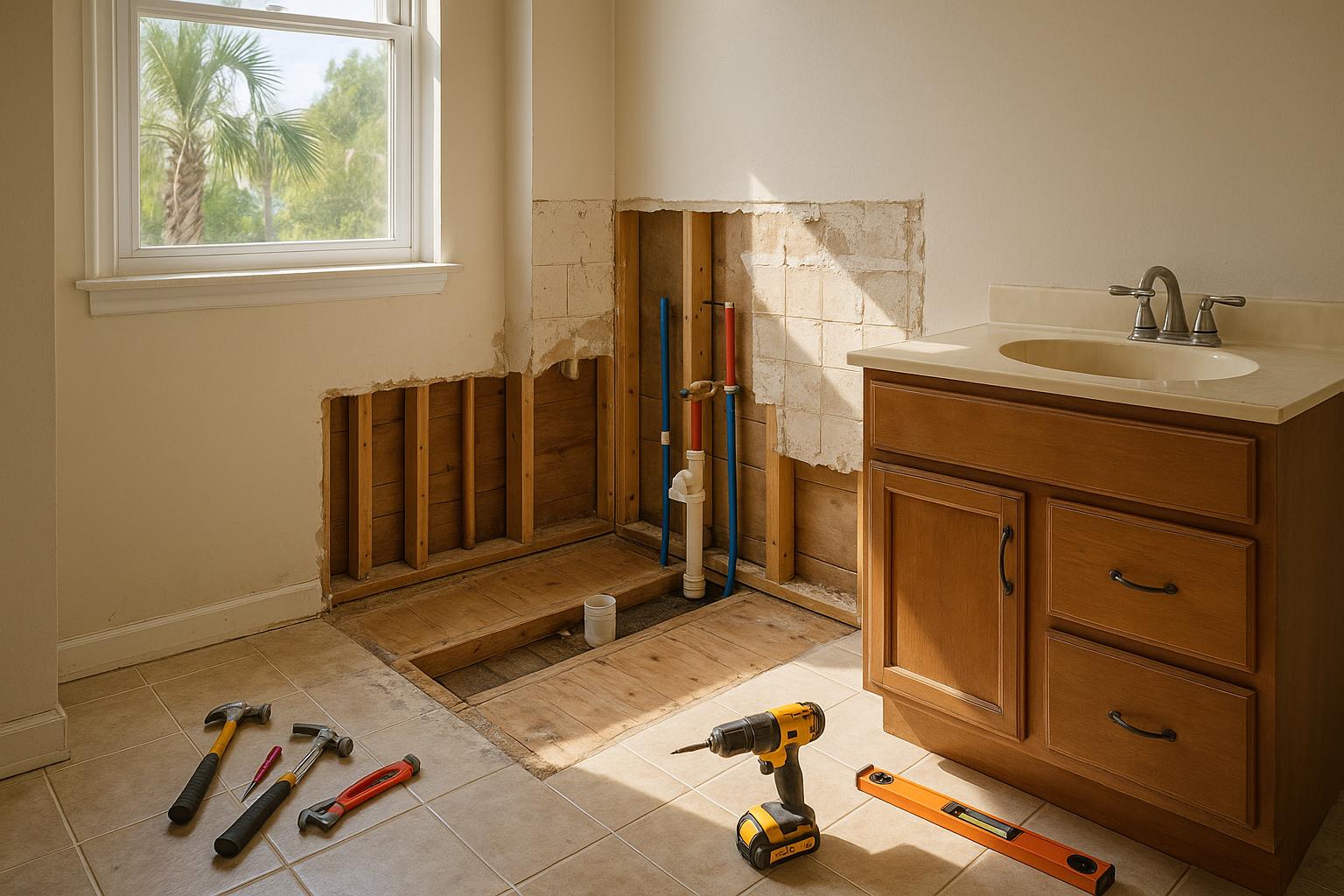
A cracked tile is a repair. But if you pull up that tile and find water damage, mold, or a deteriorating subfloor underneath, you're looking at a much bigger project. Surface damage in kitchens and bathrooms often hides structural issues that have been developing for years.
Fort Lauderdale's climate doesn't do homeowners any favors here. High humidity, heavy rains, and the occasional tropical storm create conditions where moisture can quietly damage areas behind walls and under floors. If your repair project uncovers something unexpected, it's usually a sign that a more comprehensive renovation is the smarter long-term investment.
4. Your Home's Systems Are Outdated
Plumbing, electrical, and ventilation systems don't last forever. If your home was built more than 20 or 30 years ago and those systems haven't been updated, a remodel gives you the opportunity to bring everything up to current code and modern standards.
This matters more than most people realize. Outdated plumbing can lead to low water pressure, slow drains, and hidden leaks. Old electrical wiring may not support modern appliances safely. Poor ventilation in bathrooms leads to mold and moisture problems that no amount of surface-level repair will prevent.
A kitchen or bathroom remodel is the ideal time to address these behind-the-wall systems because the walls are already open. Trying to update plumbing or electrical without a remodel means tearing into finished surfaces and then repairing them — which often costs nearly as much as renovating the whole room.
5. You're Planning to Sell (or Want to Love Your Home Again)
Whether you're preparing to list your home or simply want to enjoy living in it more, there's a tipping point where cosmetic updates no longer move the needle. Fresh paint and new hardware can only do so much for a kitchen with 1990s laminate countertops and fluorescent lighting.
Fort Lauderdale's real estate market rewards updated kitchens and bathrooms. Buyers in this area expect modern finishes, and appraisers take the condition of these rooms seriously. If your goal is to increase your home's value — or just stop dreading your morning routine — a remodel delivers results that repairs simply can't.
6. The Cost of Repairs Is Approaching the Cost of Remodeling
This is the most practical sign of all. Start adding up what you've spent on repairs over the past few years — the plumber visits, the replacement parts, the weekend hardware store runs. Now compare that number to what a proper remodel would cost.
Many homeowners are surprised to find they've already spent thousands on maintaining a space that still doesn't function well or look the way they want. At a certain point, redirecting that money toward a remodel gives you a finished result instead of an endless maintenance cycle.
How to Take the Next Step
If several of these signs sound familiar, it's worth having a conversation with a remodeling contractor who can assess your space honestly. Not every situation calls for a full gut renovation — sometimes a targeted remodel of specific areas is enough to solve the problems you're dealing with.
At Atlas Construction Fort Lauderdale, we help homeowners across Fort Lauderdale, Oakland Park, Wilton Manors, Pompano Beach, and the surrounding area figure out exactly what their home needs. We'll walk through your space, identify what's worth saving and what needs to go, and give you a clear picture of what a remodel would involve.
The goal isn't to sell you on the biggest project possible. It's to help you stop spending money on fixes that aren't fixing anything — and start investing in a home that actually works for you.
Ready to find out if it's time? Contact us for a free consultation and let's talk about what your home really needs.